Sleep science · Mattress guide
Choosing an Organic Mattress: Materials, Certifications, and Fit
An “organic” label can be a useful starting point, not a verdict. To compare mattresses with confidence, look beneath the cover: identify what each layer is made of, understand which certifications apply to which materials, and test whether the design suits your body, sleeping position, and bed frame.
A practical guide to organic mattress materials, verification claims, support, and fit.
Start with the layers, not the label
Mattress shopping often begins with a word that sounds definitive: organic. Yet a mattress is a composite object, assembled from several materials that may be sourced, processed, and certified in different ways. A cotton cover, wool fire barrier, latex comfort layer, and spring unit do not necessarily share the same origin or certification. The product’s name may describe one component, while its overall construction includes other materials.
The first useful question is therefore not simply “Is it organic?” but “What is in each layer, and what evidence supports the claims?” Ask for a materials list that identifies the cover, comfort layers, support core, fire barrier, adhesives, and any treatments. If a manufacturer provides only broad phrases—“natural,” “clean,” or “eco-friendly”—without explaining what they mean, keep looking for specifics.
Construction matters because each layer plays a different role. The upper comfort layers influence how the mattress feels at first contact and how it cushions pressure. The deeper support system helps keep the body from sinking too far and contributes to the overall stability of the bed. A cover protects the interior and affects the surface feel, while a fire barrier is included to meet applicable safety requirements. The materials interact, so judging one ingredient in isolation can leave out the larger picture.
For example, natural latex can be used as a comfort or support layer; cotton may appear in a quilted cover or fabric casing; and wool may serve as upholstery, a temperature-buffering layer, or part of a fire barrier. In a spring mattress, these fibers may sit above a pocketed coil system. The result depends on thickness, arrangement, firmness, and workmanship—not just the names of the materials.
Understand common organic mattress materials
Natural latex: buoyant, resilient, and layered
Latex mattresses are typically built from one or more latex layers, sometimes paired with cotton and wool. Latex has a springy, responsive feel: it compresses under pressure and recovers when that pressure is released. Some sleepers appreciate that buoyancy because it can make changing positions feel easier than on a surface that absorbs movement more deeply. The experience depends on the type of latex, its firmness, the layer thickness, and the rest of the mattress.
Two common production methods are Dunlop and Talalay. They refer to different manufacturing processes and can produce differences in texture and feel, but the method alone does not determine whether a mattress is right for a particular sleeper. Likewise, “natural latex” and “organic latex” are not interchangeable claims. Check the exact description, the percentage or composition stated, and the certification documentation for the latex itself.
A layered design may allow a choice of firmness in individual layers, and some models allow layers to be rearranged or exchanged. That can be useful when a sleeper is uncertain about firmness, or when two people sharing a bed have different preferences. It is still important to ask what can be customized, whether the change applies to each side, and what the relevant exchange terms are.
Cotton: a familiar fiber with several jobs
Cotton can form the mattress cover or a layer in the upholstery. It is a plant fiber whose feel depends on fabric construction, finishing, and how it is combined with other materials. A cotton cover does not, by itself, establish that the latex, wool, or other components are organic. Look for a certification that specifically covers the cotton or textile product, and check whether the claim applies to the finished item or only to a particular input.
Practical details deserve attention, too. A zippered cover may look removable, but that does not automatically mean it can be machine washed or safely removed for cleaning. Follow the manufacturer’s instructions. A separate mattress protector can help guard against spills, sweat, and ordinary wear, but its fit and fabric may change the bed’s surface feel and temperature.
Wool: cushioning and a fire-barrier material
Wool may appear in quilted upholstery or as a component of a mattress fire barrier. It can contribute a soft, resilient feel and help manage moisture at the surface. The word “wool” does not tell you whether the fiber is certified organic, how it was processed, or where it sits in the construction. Ask for the layer description and the applicable certification rather than assuming one wool-related claim covers all wool in the mattress.
Mattresses must meet fire-safety requirements, but the presence of wool does not, on its own, explain how the finished product complies. Manufacturers should be able to describe the fire-barrier materials and provide accurate product documentation. Treat claims about safety or chemical exposure with care: certification scope and test results matter more than sweeping assurances.
Springs and mixed-material constructions
Organic mattresses are not limited to all-latex designs. Some combine natural fibers with steel springs, using the springs as the primary support system and materials such as cotton, wool, or latex above them. Pocketed coils are individually enclosed and can respond separately to pressure; other spring arrangements may behave differently. Coil count alone does not reveal comfort or quality. The gauge, arrangement, zoning, edge construction, and upholstery layers all contribute to how a mattress feels.
Mixed-material designs make a complete materials inventory especially important. A product may contain several natural or certified fibers alongside steel, fabric, and other components. That is not automatically a drawback. The task is to understand the whole product accurately and decide whether its construction meets your needs and standards.
Read mattress certifications with precision
Certification is most helpful when you know what it covers. Some programs assess a specific material, some evaluate textiles or finished products, and others address manufacturing or chemical-emissions criteria. A certification associated with one layer should not be read as proof that every component in the mattress has the same status.
When a product page names a certification, look for a current certificate, the certified entity or product, and the scope of the claim. Check whether the documentation refers to the latex, cotton fabric, wool, or complete mattress. If the page says a mattress is “certified,” but does not identify the standard or the certified component, ask the manufacturer for clarification.
Certification programs can change their requirements and categories over time. Rather than relying on a badge alone, verify the claim through the certifier’s public resources or by requesting documentation from the company. Confirm that the product name and model match the item you are considering. Keep an eye on distinctions between certified raw materials and certification of a finished product, since those are not necessarily the same thing.
A certification check, in five questions
- Which specific material or product is certified?
- What standard or certification program is being cited?
- Is the certificate current and traceable to the product or manufacturer?
- Does the claim cover the finished mattress, a component, or a manufacturing process?
- Are there other layers or treatments that the certificate does not address?
Be cautious about language that sounds scientific but remains undefined. “Chemical-free” is not a meaningful literal description of a mattress: all materials are made of chemicals. Better questions concern named substances, testing criteria, emissions, and the scope of any claims. Similarly, “hypoallergenic” does not guarantee that an individual will have no reaction. People with specific allergies or sensitivities should review the materials list and discuss concerns with an appropriate healthcare professional when needed.
Certifications are one part of due diligence, not a substitute for understanding performance. They may help verify a sourcing, composition, or testing claim, but they do not determine whether a mattress is comfortable, provides suitable support, or fits your room and foundation. Those questions require their own checks.
Find a feel that supports your body
“Firm” and “soft” are useful shorthand, but they are not universal measurements. A mattress that feels firm to one person may feel less firm to another because body size, shape, sleep position, and personal preference influence how pressure is distributed. The aim is not to select the hardest or softest surface. It is to find a mattress that feels comfortable while helping your body rest in a relaxed, supported position.
Sleep position offers a starting point. Side sleepers often pay close attention to cushioning around the shoulder and hip, while back sleepers may want a balance of contouring and support through the trunk. Stomach sleepers sometimes prefer a surface that limits excessive sinking around the midsection. These are broad tendencies, not strict rules. Pain, mobility, body proportions, and what feels comfortable to you matter more than a label assigned to a sleeping position.
When testing a mattress, lie in your usual position for several minutes rather than judging it from a brief sit or press. Notice whether pressure builds at the shoulder, hip, or another point. Consider whether your lower back feels supported and whether turning over takes more effort than you prefer. If two people share the bed, both should test it when possible, including any difference in firmness available on each side.
Materials can affect how the mattress responds, but they cannot promise a particular health outcome. A mattress may contribute to comfort and ease of movement; it is not a treatment for a medical condition. Persistent pain, numbness, breathing concerns, or disrupted sleep warrant advice from a qualified healthcare professional.
Make fit a measurement, not a guess
A promising mattress can still disappoint if it does not fit the bed frame, room, or sleeper. Confirm the mattress’s exact dimensions and compare them with the foundation or platform. Measure the frame’s internal dimensions rather than relying only on its stated size, especially with older, handmade, or non-standard furniture. Check the mattress thickness as well: a thicker design can change the height of the sleep surface and the fit of existing sheets.
Also confirm the foundation requirements. Some mattresses work with adjustable bases, while others need a firm, well-supported platform or a particular type of foundation. Follow the manufacturer’s guidance on slat spacing, center support, and any weight limits. An unsuitable foundation can affect performance and may complicate warranty coverage.
For couples, consider movement transfer, edge support, and whether the mattress offers separate firmness choices. For people who move or use an adjustable base, flexibility and mattress weight may be practical concerns. If a mattress is shipped in components or assembled at home, ask about setup steps and whether the layers need to be placed in a specific order.
Before buying, read the trial, exchange, warranty, delivery, and return terms. Pay particular attention to deadlines, fees, required foundations, and whether the cover or comfort layers are excluded from certain protections. A long warranty is not the same as a long comfort guarantee, and it usually covers defined defects rather than normal changes in feel.
A structured way to compare options
When two mattresses look similar on paper, a short comparison can separate meaningful differences from marketing language. Write down the material in each layer, the certifications and their scope, the feel you experienced, the foundation requirements, and the terms that apply after delivery. This turns a vague impression into a practical record you can revisit.
- List your priorities. Note your preferred feel, usual sleep position, temperature preferences, sensitivities, and any shared-bed needs.
- Map the construction. Identify the cover, upholstery, comfort layers, support system, and fire barrier.
- Verify claims. Match each certification to the component or finished product it actually covers.
- Check the setup. Confirm dimensions, foundation compatibility, mattress height, and room access for delivery.
- Test and compare. Spend time in your ordinary sleeping positions, then record pressure, support, and ease of movement.
- Review the terms. Understand exchanges, returns, warranty exclusions, delivery, and care before committing.
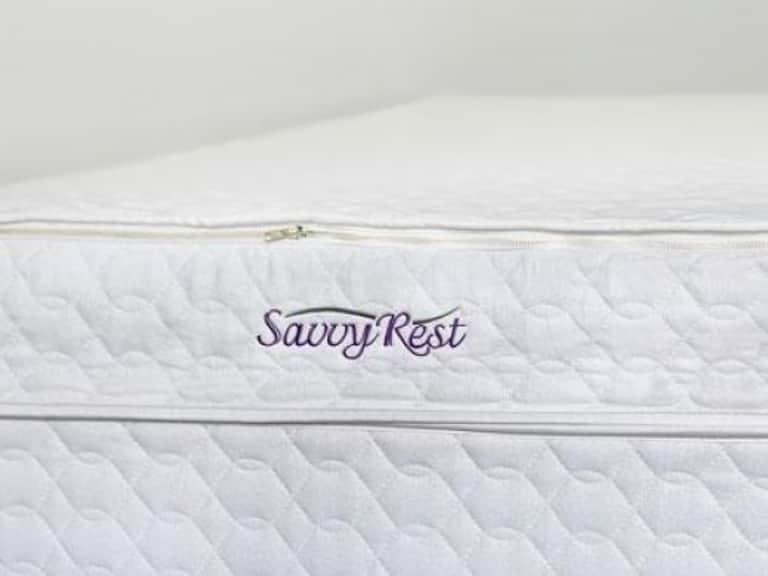
One example of a customizable latex construction is the Savvy Rest Tranquility Latex Mattress. Its described design uses two latex layers with options involving Dunlop, Talalay, or a combination, plus an organic cotton casing and an organic wool flame barrier. The product information lists a seven-inch profile and a layer exchange policy. Those details make it possible to ask more focused questions about feel, layer choices, weight suitability, setup, and terms; they do not make the mattress the right choice for every sleeper.
Questions worth asking before you decide
- Can you provide a complete materials breakdown, including the fire barrier and any adhesives or treatments?
- Which materials are certified, and can I review the current documentation?
- How does the mattress feel in the firmness configuration I am considering?
- Can layers be changed or rearranged after delivery, and what are the conditions?
- What type of foundation is required, and are there slat-spacing or support requirements?
- How should the mattress be protected and cleaned, and is the cover removable or washable?
- What do the trial, return, warranty, delivery, and exchange policies exclude?
Clear answers are a sign that a manufacturer understands its product and can explain it. If claims remain vague, or if a salesperson treats every certification as proof of every benefit, pause and seek documentation. In a category where the terms “natural” and “organic” are used in many ways, precision is more valuable than reassurance.
The bottom line: evidence and comfort must meet
Choosing an organic mattress is an exercise in separating three questions that are often bundled together: what the mattress contains, how its claims are verified, and how it feels under your body. A trustworthy materials list and appropriately scoped certifications help answer the first two. Testing the mattress, checking fit, and reviewing the practical terms help answer the third.
No single material, certification, or firmness label can make that decision for you. Start with transparent construction details, follow the evidence to the component it actually covers, and give your own comfort a proper test. The best-informed choice is not necessarily the mattress with the longest list of claims. It is the one whose materials you understand and whose support and fit make sense for the way you sleep.
Frequently asked questions
Does “organic mattress” mean every layer is organic?
Not automatically. The claim may refer to selected materials or a defined certification scope. Review the layer-by-layer materials list and check which components are covered by each certification.
Is natural latex the same as organic latex?
No. “Natural” describes a material claim, while “organic” generally depends on defined production and certification requirements. Ask for the exact composition and documentation for the latex in the mattress.
Can certifications tell me whether a mattress will be comfortable?
Certifications can help verify certain material, testing, or production claims. They do not predict your personal comfort or guarantee a particular level of support. Testing and checking the return or exchange terms remain important.
Is a firmer mattress always better for back support?
No single firmness is best for everyone. Body shape, sleeping position, comfort, and individual needs affect how a mattress feels. Seek a surface that feels comfortable and supportive rather than relying on firmness claims alone.
Should I use a mattress protector?
A protector can help limit exposure to spills, moisture, and everyday soil. Check its care instructions and consider its fabric and waterproof layer, since these can affect the surface feel or temperature of the bed.